Cost to Install Pavers in 2026: Real Prices, Key Factors, and Smart Ways to Save
Pavers look great, last a long time, and are easy to repair. However, the cost to install pavers can vary widely depending on the project size, material, access, base preparation, drainage needs, and the installer you hire.
This guide breaks down actual installed prices per square foot, common costs by project type, material costs, contractor expenses often hidden in estimates, and smart ways to avoid overspending. You will also see quick examples, a simple checklist, and a short glossary so you can speak the same language as paver installers.
For homeowners in San Diego County, Aviara Pavers provides professional paver installation for patios, driveways, pool decks, walkways, entryways, and outdoor living spaces.

TL;DR
Most paver patios cost around $10 to $30 per square foot installed, with premium stone and complex builds reaching $35 to $50 per square foot.
Material, site prep, base depth, access, drainage, and pattern complexity often affect the final price more than the paver itself.
Labor often runs $5 to $20 per square foot and can account for about half of the total project cost.
A solid base, usually around 4 inches for patios and walkways and 6 inches for driveways, plus a finished slope of about 2%, helps protect your investment.
Common behind-the-scenes costs include hauling, dumping, fuel, delivery, cleanup, pallet fees, portable restrooms, insurance, licensing, taxes, and warranty support.
Low bids aren't always the best value. A quote that leaves out base prep, drainage, disposal, insurance, or cleanup may cost more later.
What a Paver Installation Really Costs
On typical U.S. projects, installed interlocking pavers average about $8 to $25 per square foot for standard materials and layouts. Projects using permeable pavers or higher-end stone often fall in the $10 to $30 per square foot band, with premium stone or intricate designs reaching $35 to $50 per square foot.
Put simply, a 300-square-foot patio typically costs $3,000 to $9,000, while a large, detailed build can cost much more. Expect labor to make up a big slice of the bill. Industry cost guides commonly list labor in the $5 to $20 per square foot range, depending on access, excavation, grading, drainage, demolition, and detailing. Tight backyards, long wheelbarrow runs, extensive soil correction, borders, step units, and many cuts all push labor higher.
As a veteran-owned and operated company that follows ICPI/CMHA installation guidance and industry best practices, Aviara Pavers helps homeowners plan durable, well-built paver projects from design through installation.
Cost to Install Pavers By Project Type
The cost to install pavers depends heavily on what you're building. A small walkway, a backyard patio, a pool deck, and a driveway all have different bases, drainage, edge restraint, and load requirements.
The ranges below are practical ballparks for common residential projects. Straightforward projects with easy access and basic concrete pavers usually fall near the lower end. Premium materials, demolition, drainage correction, limited access, curves, borders, and custom designs drive up costs.
| Project Type | Typical Size | Estimated Cost |
|---|---|---|
| Small paver patio | 100 to 200 sq ft | $1,000 to $3,000 |
| Medium paver patio | 300 to 500 sq ft | $3,000 to $5,000 |
| Large paver patio | 500+ sq ft | $5,100 to $8,500+ |
| Short walkway | 50 to 100 sq ft | $400 to $800 |
| Medium walkway | 100 to 200 sq ft | $800 to $1,600 |
| Long walkway | 200+ sq ft | $1,700 to $3,500+ |
| Single-car driveway | 200 to 500 sq ft | $2,400 to $6,000 |
| Double-car driveway | 500+ sq ft | $6,000 to $15,000 |
| Large driveway | 800+ sq ft | $15,000 to $25,000+ |
| Basic pool deck | 200 to 400 sq ft | $2,400 to $5,000 |
| Medium pool deck | 400 to 600 sq ft | $5,100 to $7,200 |
| Large pool deck | 600+ sq ft | $7,300 to $15,000+ |
These ranges are best used for early planning. A written estimate should still account for demolition, excavation depth, base thickness, drainage, edge restraints, access, cleanup, and any sealing or finishing work.
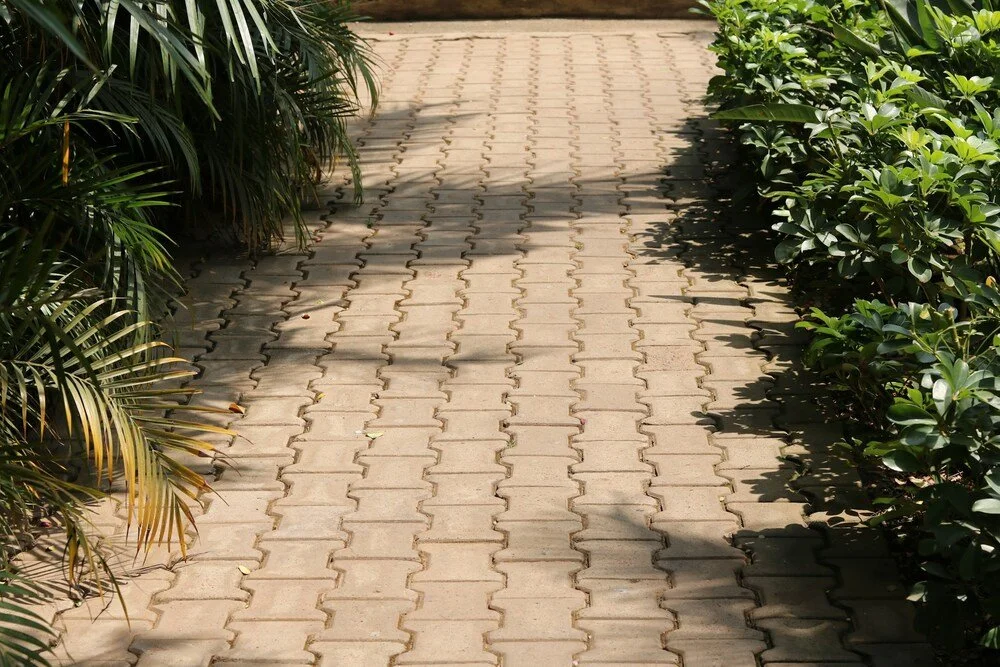
Cost By Paver Type
Below are typical installed ranges homeowners see when comparing paver options. Your final price depends on local labor rates, access, scope, soil conditions, and design complexity.
| Paver Type | Typical Installed Cost Per Sq Ft | Pros | Consider If |
|---|---|---|---|
| Concrete interlocking pavers | $8 to $15 | Most affordable, many colors and shapes, easy repairs | You want value and design flexibility |
| Clay brick pavers | $8 to $25 | Classic look, colorfast, durable in freeze-thaw conditions | You prefer traditional patterns and tones |
| Natural stone or flagstone | $15 to $50 | High-end look, unique pieces, long life | You want a premium finish and have budget room |
| Permeable interlocking pavers | $10 to $40 | Manages stormwater, reduces runoff, and is quick to reopen | You face drainage limits or want greener infrastructure |
Material Costs Before Labor
Installed pricing is the number most homeowners care about, although material-only costs are also useful when comparing estimates. Pavers themselves may only be one part of the total budget.
| Material | Estimated Material Cost Per Square Feet |
|---|---|
| Concrete pavers | $2 to $8 |
| Brick pavers | $4 to $15 |
| Natural stone pavers | $8 to $30 |
| Porcelain pavers | $8 to $22 |
| Permeable pavers | $6 to $18 |
| Flagstone | $6 to $15 |
| Travertine | $4 to $16 |
Material cost doesn't include excavation, base rock, bedding sand, geotextile fabric, joint sand, edge restraints, demolition, disposal, labor, equipment, delivery, cleanup, overhead, or profit. That is why a paver that costs $4 per square foot to buy can still become part of a $15 to $25 per square foot installed project.
What Drives the Price
Gaining insight into the financial moving parts behind your hardscaping project keeps you firmly in control of your budget from the very first consultation. This breakdown lets you envision exactly where your investment goes, helping you confidently plan a breathtaking outdoor makeover that matches your financial comfort zone.
Excavation and Disposal
Removing sod, old concrete, existing pavers, roots, or thick clay adds labor, hauling, and dumping costs. If an old concrete patio or driveway must be broken out and hauled away, the project can cost significantly more than a clean new installation on open soil.
Base Depth and Soil Correction
The compacted aggregate base does the heavy lifting. Residential guidelines commonly call for roughly 4 inches of compacted base for patios and walkways and about 6 inches for driveways, with adjustments for weak soils, clay soils, drainage needs, or heavier loads. Bedding sand usually sits on top at about 1 inch.
Drainage and Slope
A finished surface slope of about 2% away from structures helps prevent pooling and foundation issues. Drainage work may include grading, permeable pavers, catch basins, drains, or a deeper open-graded base.
Edge Restraints
Proper curbs or spiked edging keep the field locked in place and reduce maintenance. Weak or missing edge restraint is one reason pavers spread, shift, or lose joint sand over time.
Layout and Details
Borders, inlays, circular cuts, curves, soldier courses, steps, seat walls, transitions, and multiple colors add time. Simple rectangles cost less per square foot than curved patios with several borders and many cuts.

Material Choice
Concrete interlocking pavers usually cost less than clay brick, natural stone, porcelain, or travertine. Permeable pavers may cost more because they require an open-graded stone base, but they can reduce or replace the need for additional drainage features.
Access and Staging
Limited machine access, narrow side yards, stairs, hand-carry zones, long wheelbarrow runs, and limited space for material staging increase labor hours.
Hidden Costs Homeowners Often Miss
A professional paver estimate includes more than pavers and labor. Some of the biggest project costs are the behind-the-scenes expenses required to complete the job correctly.
Here are examples of costs that can appear on real paver installation projects:
| Cost Item | Example Cost |
|---|---|
| Dumping 2 truckloads of dirt | About $320 |
| Dumping 3 truckloads of concrete | About $375 |
| Total sample dumping cost | About $695 |
| Fuel for trucks and equipment | About $530 |
| Delivery fees | About $585 |
| Cleanup | About $250 |
| Pallet fees | Starting around $0.10 per square foot |
| Pallet fee on a 400 square feet project | About $40 |
| Portable bathroom for crew | About $130 |
These numbers are examples, not fixed prices. The point is that a legitimate contractor has real operating costs for hauling, disposal, staging, transportation, crew support, and cleanup. If these costs aren't included in the estimate, they may appear later as change orders or be skipped, which can affect quality.
Sample Contractor Cost Breakdown: 400 Sq Ft Patio
Here is a simplified example of how a 400-square-foot paver patio can add up before profit is even considered.
| Cost Category | Example |
|---|---|
| Pavers and materials | Varies by material |
| Class II road base | $0.75 to $14 per sq ft |
| Geotextile fabric | At least $0.45 per sq ft |
| Bedding sand | $0.36 to $0.45 per sq ft |
| Concrete bond beam material | At least $1.35 per sq ft |
| Joint sand | $0.12 to $0.20 per sq ft |
| Dumping and disposal | Example: $695 |
| Fuel and delivery | Example: $1,115 combined |
| Cleanup | Example: $250 |
| Pallet fees | Example: $40 |
| Portable bathroom | Example: $130 |
This is why two estimates can look very different. One contractor may include proper base prep, geotextile, edge restraint, disposal, delivery, and cleanup. Another may give a lower number, leaving important items vague or excluded.
Why Very Low Paver Quotes Can Be Risky
A low bid isn't automatically bad, but it should be reviewed carefully. If one estimate is far below the others, ask what is missing. A low paver installation quote may signal:
A thinner base than the project needs
No geotextile fabric over clay or silty soils
Weak or missing edge restraints
Limited drainage planning
No disposal or dumping costs included
No cleanup included
No warranty support
Inadequate insurance
Undertrained labor
Lack of proper compaction equipment
No clear written scope
The cheapest cost to install pavers isn't always the lowest long-term cost. If the base fails, the edges spread, or drainage is wrong, the repair can be more expensive than doing the job correctly the first time.
Business Overhead and Why It Matters
Professional paver companies also carry overhead costs that protect homeowners and support the project after installation. These costs may include:
Workers’ compensation insurance
General liability insurance
Contractor licensing and bonds
Business taxes
Administrative staff
Office or yard rent
Trucks and equipment
Maintenance and fuel
Estimating and design time
Training and certifications
Warranty service
Utilities and software
Safety equipment
A healthy contractor may set aside at least 10% overhead to keep the business operating and to support warranty-period repairs. This is one reason a professional quote may cost more than a one-person or uninsured crew. You're not only paying for installation time; you are paying for accountability, equipment, insurance, planning, and support if something goes wrong.

DIY vs. Hiring a Pro
Installing pavers is straightforward in theory but demanding in practice. Most of the job is excavation, base prep, compaction, grading, screeding, edge restraint, cutting, and joint filling. These steps must be right for the surface to last.
Small, straight-run walkways on good soil can be DIY-friendly. Patios near foundations, clay or wet soils, steps, retaining edges, driveways, pool decks, or permeable systems usually favor hiring a certified installer. A professional installer is especially helpful when the project involves:
Drainage near the home
Vehicle loads
Pool deck safety
Sloped lots
Clay soil
Demolition
Large patios
Curved layouts
Permeable pavers
Tight access
Multiple elevations
Steps or retaining edges
For homeowners in San Diego County, Aviara Pavers installs paver patios, driveways, pool decks, walkways, and outdoor living spaces using professional design, material selection, and installation practices.
Permits, Drainage, and Standards That Matter
Rules vary by city, but many municipalities regulate drainage and setbacks. Some require permits for patios, driveway alterations, or work that changes drainage patterns. A common requirement is that you cannot direct runoff onto a neighbor’s property, and some projects may need inspections before pavers are installed.
For concrete interlocking pavers, look for units that meet the current ASTM C936/C936M standard, the U.S. product standard for solid concrete interlocking paving units. Clay brick, natural stone, porcelain, and travertine pavers may follow different product standards or manufacturer specifications. Residential guidance also commonly calls for:
Minimum paver thickness around 2 3/8 inches, or 60 mm, for pedestrian and many residential uses
Compacted aggregate base of about 4 inches for patios and walkways
A compacted aggregate base of about 6 inches for driveways
Bedding sand around 1 inch
Reliable edge restraints
Finished surface slope near 2% for drainage
If you choose Permeable Interlocking Concrete Pavers, also called PICP, the system uses an open-graded, high-void stone base that stores and infiltrates stormwater. This can reduce runoff volume and help meet local stormwater goals.
Examples
Reviewing baseline scenarios gives you a concrete reference point to visualize how your own backyard aspirations translate into actual numbers.
400 Sq Ft Patio
A 20x20 paver patio provides homeowners with enough space for a dining area, a grill, and seating. For a straightforward installation, a 400 sq ft patio may cost around $3,000 to $5,000 on the lower end. More complex builds with demolition, drainage, premium materials, or difficult access can cost significantly more.
This size is also a helpful benchmark because many contractor costs become visible: material pallets, delivery, dumping, cleanup, base rock, bedding sand, joint sand, edge restraints, and crew support.
1,000 Sq Ft Paver Installation
A 1,000 sq ft paver project may be a large patio, driveway, pool deck, or combined outdoor living area. At typical installed prices, this can range from about $15,000 to $ 30,000+, depending on material availability, demolition, drainage, and design complexity.
Large projects usually need more careful staging, more base material, more cuts, more hauling, and more crew time. They may also trigger additional permit or drainage review, depending on the city.
12x12 Paver Patio
A 12x12 patio is 144 sq ft. Even though it's small, the installer still has to mobilize a crew, deliver materials, excavate, compact the base, screed sand, cut edges, install restraints, and clean up.
That is why a small paver patio may still cost around $3,000, especially if access is difficult or the project has a minimum labor charge.
How to Save Money Without Cutting Corners
You can reduce the cost to install pavers without sacrificing the parts that matter most.
Choose a simple layout. Rectangles and straight borders cost less than curves, circles, and complex inlays.
Use standard concrete pavers. They offer strong value, broad design options, and easier repairs. Avoid unnecessary demolition. If possible, plan the project before adding temporary surfaces that later need to be removed.
Improve access. Clearing side yards, gates, and staging areas can reduce labor time.
Group projects together. Installing a patio and walkway together may be more efficient than two separate mobilizations.
Compare written scopes, not just totals. Make sure every quote includes excavation, base depth, bedding sand, edge restraint, drainage, cuts, cleanup, and disposal. Don't skimp on base prep. Saving money on the base is one of the fastest ways to create future settling, shifting, and drainage problems.
Actionable Steps / Checklist
Preparation is the secret to transforming your backyard dreams into a stress-free reality, with no surprises along the way.
Measure your space and sketch a simple plan with dimensions, borders, and any steps.
Decide the use, whether it's a patio, walkway, driveway, pool deck, or outdoor living space.
Plan base depth accordingly and include geotextile over silty or clay soils when needed.
Pick a paver category that fits your design and budget, whether it's concrete, brick, stone, porcelain, travertine, or permeable.
Confirm edge restraints and a finished slope of about 2% away from the house.
Ask for a written scope that lists excavation depth, base thickness, bedding sand, compaction, cuts, cleanup, and disposal.
For concrete interlocking pavers, verify that units meet the current ASTM C936/C936M standard. For brick, stone, porcelain, or travertine, verify the applicable product standard or manufacturer specification.
Check local permit and drainage rules, including setbacks and easements, before work starts.
If quotes differ widely, compare access assumptions, demolition, disposal, borders, steps, sealing, and warranty terms.
For permeable systems, confirm open-graded aggregate specs and maintenance expectations.
Plan maintenance, including sweeping, occasional joint sand touch-ups, and resealing if desired.
Why Choose Aviara Pavers
Our paver specialists help San Diego County homeowners design and install durable, attractive paver surfaces for patios, driveways, pool decks, walkways, entryways, and outdoor living spaces. Homeowners choose Aviara Pavers because the company is:
Veteran-owned and operated
Experienced with San Diego paver projects
Focused on professional design and installation
Familiar with ICPI/CMHA installation guidance and industry best practices
Able to help with material selection, layout, drainage planning, and long-term durability
If you're comparing the cost to install pavers for your home, Aviara Pavers can help you understand your options, avoid vague estimates, and build a surface designed to last.
Ready to price your paver project? Contact Aviara Pavers for a professional estimate for your patio, driveway, pool deck, entryway, or outdoor living space.

Glossary
Familiarizing yourself with common industry terms bridges the gap between your vision and the technical execution required to make it last.
Bedding Sand: A 1-inch layer of concrete sand that supports pavers and allows final leveling.
Base: The compacted aggregate layer under the bedding sand that carries loads and sheds water.
Bond Beam: A concrete edge or border support that helps lock pavers in place.
Edge Restraint: A curb or spiked edging that prevents lateral movement and loss of joint sand.
Geotextile Fabric: A fabric layer used to separate soil from base material, especially helpful over clay or silty soils.
Interlocking Paver: A manufactured unit, typically concrete or clay, designed to lock in place under load.
PICP: Permeable interlocking concrete pavers that let water pass into an open-graded stone base.
Polymeric Sand: Joint sand with binders that harden when activated, reducing washout and weeds.
Slope: The intentional tilt of the finished surface, often about 2%, to move water away from structures.
ASTM C936/C936M: The U.S. product standard for solid concrete interlocking paving units.
FAQ
How much do pavers cost per square foot installed?
Most standard paver patios fall in the $10 to $30 per sq ft range. Premium stone, complex designs, difficult access, demolition, or major drainage work can push the cost to $35 to $50 per sq ft.
What is the average cost to install pavers?
For many residential projects, the average cost to install pavers ranges from about $8 to $25 per sq ft for standard installations and $10 to $30 per sq ft for higher-end or permeable systems. A 3,300-sq-ft patio often costs $3,000 to $9,000.
How much does a 20x20 paver patio cost?
A 20x20 paver patio is 400 sq ft. A standard installation often costs around $3,200 to $10,000, while premium materials, demolition, drainage, difficult access, or complex design details can push the total closer to $20,000.
How much does a 12x12 paver patio cost?
A 12x12 paver patio is 144 sq ft. It often costs roughly $1,500 to $4,300 installed, depending on material, access, excavation, base prep, and local labor rates. Small-project minimums can still put many professional jobs around $3,000.
How much does it cost to install 1,000 sq ft of pavers?
A 1,000 sq ft paver installation often costs around $15,000 to $30,000+, depending on material, access, demolition, drainage, base requirements, and design complexity.
Is a permit required for a paver patio?
A permit for paver patio construction depends on your city and the scope of the project. Some places require permits, setbacks, and drainage checks. Many prohibit directing runoff onto neighboring lots.
What base do I need under pavers?
For patios and walkways, plan about 4 inches of compacted aggregate plus 1 inch of bedding sand. For driveways, plan about 6 inches of base, adjusted for soil, drainage, climate, and expected load.
Are permeable pavers worth it?
Permeable pavers are worth the investment because they can reduce runoff and help meet stormwater goals. They cost more upfront but may replace or simplify other drainage features.
Why are paver installation quotes so different?
Quotes vary due to excavation depth, base thickness, material choice, access, disposal, drainage, edge restraints, design complexity, insurance, cleanup, and warranty support. Always compare the written scope, not just the total price.
How long do paver patios last?
With a proper base, slope, drainage, and edge restraints, paver surfaces can last for decades. Individual units are also easy to lift and reset if repairs are needed.
Final Thoughts
The cost to install pavers depends on more than the paver you choose. The parts you cannot see, such as the base, slope, drainage, edge restraints, compaction, and soil preparation, often determine how long the finished surface lasts.
Use the ranges in this guide to build a realistic budget, then compare written scopes carefully. A good paver estimate should explain the materials, excavation depth, base thickness, drainage plan, edge restraints, disposal, and cleanup, and warranty support.
For homeowners in San Diego County, our paver installation specialists can help plan and install a patio, driveway, pool deck, walkway, or outdoor living space built for long-term performance. Contact Aviara Pavers today to get a professional paver installation estimate.